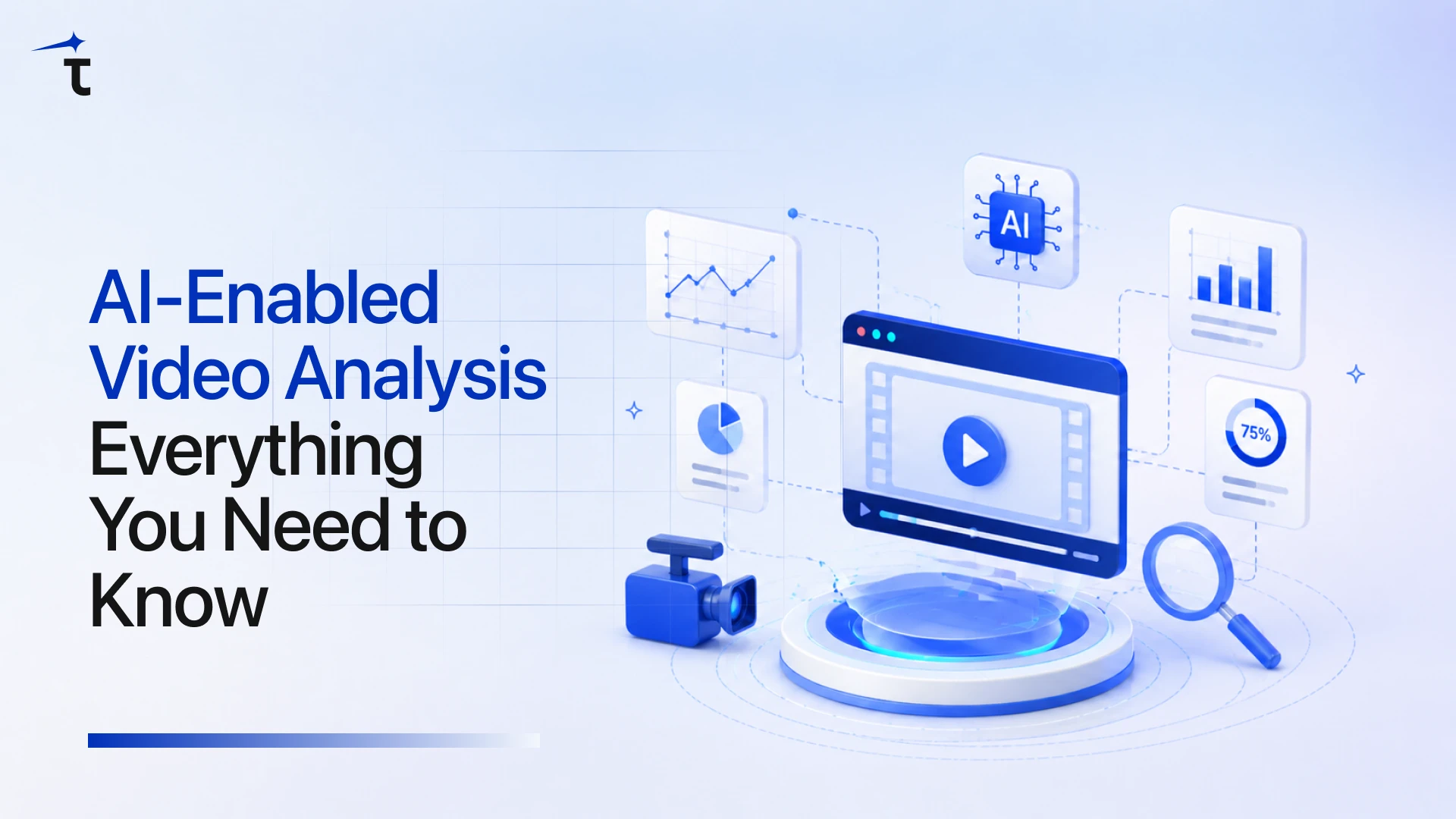
With the rise of CCTV cameras, drones, and other IoT devices, the volume of video produced daily has increased; as a result, many organizations have begun using AI to analyze the large volume of video they generate. AI video analysis leverages technologies such as machine learning and computer vision and enables organizations to automatically analyze, categorize, and respond to video in real time as it is produced.
AI is also changing how surveillance systems operate. Instead of just being a recording device, which was their primary use in the past, many AI-enabled video analysis surveillance systems have evolved to be proactive systems that provide organizations with an intelligent system for continuous real-time monitoring, insights into what is occurring right now, and the ability to make intelligent decisions based on the current data.
In environments with hundreds to thousands of cameras and critical events, when an incident occurs, it is almost impossible for someone on duty to see or respond to it in a reasonable timeframe. When this occurs, incidents may be missed, sent too late, or go unnoticed, all of which will negatively impact the overall effectiveness of that organization’s video surveillance system.
This guide to AI video analysis includes the technologies that support it and examples of its use across industries worldwide. Additionally, you’ll learn about the benefits, risks, and recommended approaches to successfully deploying AI video analytics to provide you with a full understanding of how AI is changing video surveillance and can be used to create smarter, more secure, and more effective workplaces.
Key Takeaways
- Real-time AI-based video analysis converts video files into useful information.
- It will improve safety, operational efficiency, and decision-making across many industries.
- Traditional video monitoring is prone to human error, fatigue, and difficulty scaling up.
- AI-based systems can identify patterns, anomalies, and behaviours with extremely high accuracy
- Retail, healthcare, transportation, and smart cities are all adopting the technology at a rapid pace.
Understanding AI-Enabled Video Analysis
Video Analysis using AI utilizes various technological platforms based on Artificial Intelligence to automatically process, analyze and extract valuable information from video. The current state of video technology has advanced beyond the simple recording of video to conducting real-time analysis of visual input to detect objects, recognize patterns, identify behaviors, and even predict possible outcomes.Therefore, video is no longer purely an information-gathering tool, but rather it has evolved into an actionable decision-supporting tool that aids in making faster and better decisions.
In order to see and accurately assess what is happening in a given video stream, AI video analysis systems utilize computer vision, deep learning, and neural network technology. As a result, AI video analysis systems are capable of identifying and tracking individuals, detecting and reporting on anomalous activity, and providing alerts without the need for human operators to continuously monitor the video stream.
Video Analytics vs. Traditional Video Surveillance
When contrasting video surveillance with video analysis, the key differentiator is the level of intelligence and efficiency of each system. Traditional video surveillance systems focus solely on capturing and storing footage, often requiring people to review and interpret it long after events occur. The manual nature of this process is slow, reactive, and prone to human error.
On the other hand, with the advent of AI-driven video analysis, this technology can actively monitor video feeds in real time to identify significant events and automatically provide relevant information. This reduces the workload on human operatives and significantly improves the accuracy of responses to significant events.
Ultimately, AI video analysis has transformed how organizations use video data, converting large amounts of unstructured, unusable footage into actionable insights that yield greater efficiency, safety, and smarter decisions.
How AI Video Analysis Works
Utilizing AI to analyze video footage can turn an entire collection of unprocessed footage into actionable insights through input and processing.Video analysis using AI leverages advanced algorithms and real-time processing to enable businesses and organizations to make better use of their video resources, moving from simply monitoring situations to making decisions about how they respond in the current moment.
- The End-to-End Pipeline: From Camera to Insight
The following is a step-by-step outline of how AI enables organizations to analyze video from the moment it is collected through the time they receive a report or insight based on the available information.
- Input video and feed ingestion
Video feeds can be obtained from many sources, including CCTV cameras, Drone Cameras, and IoT devices. The video feed is collected and then sent to the computer system, which has cloud, on-premises, or edge computing capabilities.
- Frame-by-frame analysis
After the video is fed into the computer system, the AI will use its computer vision processing capabilities to break down every frame of the video, i.e., each image captured by the camera, to enable a high level of accuracy in identifying and interpreting each image.
- Feature and object identification
AI uses its vast database to characterize and categorize objects within the video frame. For example, if the video data comes from a CCTV camera, the AI’s ability to recognize people, vehicles, animals, etc., will depend on large sets of example images of each object.
- Metadata extraction
After classifying and characterizing all objects in the video frame at a specific point, the AI will write metadata for all objects identified in that frame. Metadata will include the object type (e.g., person, vehicle), the date and time it was detected or identified, and its location relative to the rest of the environment. By using metadata, videos can be searched and analyzed more easily later.
- Event and behavior recognition
In this stage, the system interprets actions and patterns, such as unusual activities, restricted access, or crowd behavior. It can trigger alerts or automated responses based on predefined rules or learned patterns, demonstrating the true power of AI-driven video analysis.
- Core AI Techniques Used
AI Video Intelligence employs advanced techniques to deliver actionable, reliable, and intelligent insights into a video’s content.
- Image classification and localization
For instance, this technique helps classify or categorize an object in an image and locate it precisely in a video frame.
- Object detection and tracking
In general, this technique allows the system to identify an object in a video frame and track it across multiple frames in real time.
- Facial recognition
As a method of identifying or verifying the identity of a person using their facial characteristics, the addition of a layer of intelligence to identity-based data.
- Anomaly detection
An anomaly or outlier may signal a threat and should be investigated further, particularly when it relates to security and risk management.
- Behavior analysis algorithms
Analysis of patterns of behavior over time to help understand intent, predict future behavior, and add additional context to a given activity.
- The Role of Machine Learning: Continuous Learning and Improvement
Machine learning is a key component of AI video intelligence, powering the continuous learning and improvement of AI video analytics systems over time. The accuracy, adaptability, and efficiency of the models used to process video data improve with each processing. As video data volumes increase, new models can be developed to adapt to changes in the environment, illumination conditions, and emerging behavioral patterns.

Types of AI Video Analytics
AI-driven video analysis is now much more advanced than just watching videos to keep an eye on what’s happening in a given area; today’s AI video analysis allows businesses to intelligently keep tabs on their surroundings, identify possible threats in real-time, and provide companies with valuable information about how they operate, which is found in thisguide to AI video analysis.
- Motion Detection
Motion detection is the most basic type of AI video analysis offered today. It detects any movement within a video frame and sends a notification that an anomalous event is occurring. Traditional systems have always been able to alert operators after activity has been identified. AI makes this much easier by indicating whether the detected motion represents a person or something else, reducing the number of false alerts.
- People Counting
AI-enabled video analysis allows organizations to measure the number of people that enter otexit a location by using AI video analysis technology. This is used by various industries to measure foot traffic, schedule staff, and provide better guest or customer experiences in many retail stores, airports, and entertainment and restaurant facilities.
- Facial Recognition
Facial recognition technology enables a system to identify or confirm a person’s identity by analyzing their facial features. Most commonly, this is used in security, access control, and law enforcement as an added layer of identity verification via AI video analysis.
- Object Detection and Tracking
Object detection and tracking enable systems to identify specific objects, such as vehicles, bags, or equipment, and to monitor their movement across frames. This capability is central to video analysis using AI, enabling real-time tracking and improved situational awareness.
- Intrusion Detection
The purpose of identifying intruders in secure or sensitive areas is, in part, to detect breaches using AI systems and quickly send an alert to a security officer. By sending alerts of boundary breaches, a quicker security response time can be achieved, rather than waiting for an officer to arrive on site.
- License Plate Recognition (LPR)
LPR automates the reading and recognition of vehicle license plates in video files using AI. LPR is used for many applications, including managing traffic, toll operations, parking, and law enforcement.
- Heat Mapping
Creating a heatmap showing movement within a specific area is very helpful to organizations that want to optimize store layout, improve customer service, and utilize space efficiently. AI-enabled video analysisprovides organizations with insight into how consumers behave within a location.
- Crowd Detection and Counting
Crowd counting and detection are essential for providing real-time information on the density and movement patterns of groups of individuals. Crowd counting is especially useful for managing large events, public safety, and urban development, as analytics can determine when a crowd becomes too large to respond.
- Smoke and Fire Detection
Innovative technology-based solutions that employ artificial intelligence to detect smoke and fire from video sources can achieve faster detection times than conventional detectors. This advanced application of artificial intelligence leverages the smart camera’s ability to analyze video in real time, providing alerts and detecting hazards promptly, enabling rapid emergency response and minimizing loss, damage, and danger.
- Tamper Detection
Tamper detection identifies a person’s intent to obstruct, move, or disable a camera. Video analysis using AI allows an administrator to be notified instantly if an obstructed or compromised camera is identified, and provides assurance that the integrity of the surveillance system is maintained at all times.
Industry Use Cases
AI-enabled video analysisis changing how industries use visual data to enhance safety, efficiency, and decision-making. By transforming video into real-time insights through analytics, businesses can move beyond passive monitoring to a more proactive approach to their operations.
Here are examples of how different industries are leveraging video analytics.
- Security & Surveillance
In security and surveillance, AI-enabled video analysisplays a critical role in detecting threats, monitoring activities, and triggering real-time alerts. From identifying suspicious behavior to detecting unauthorized access, AI-powered video analysis helps organizations shift from reactive monitoring to proactive threat prevention, significantly improving overall security outcomes.
- Retail & Loss Prevention
Video analytics provide retail businesses with information about customer movements through a store, help prevent shoplifting, and analyze how customers behave in-store. For instance, system metrics such as foot traffic, time spent, and heatmaps provide retailers with valuable insights and data to inform their layout design, ultimately enhancing customers’ shopping experiences.
- Healthcare & Patient Safety
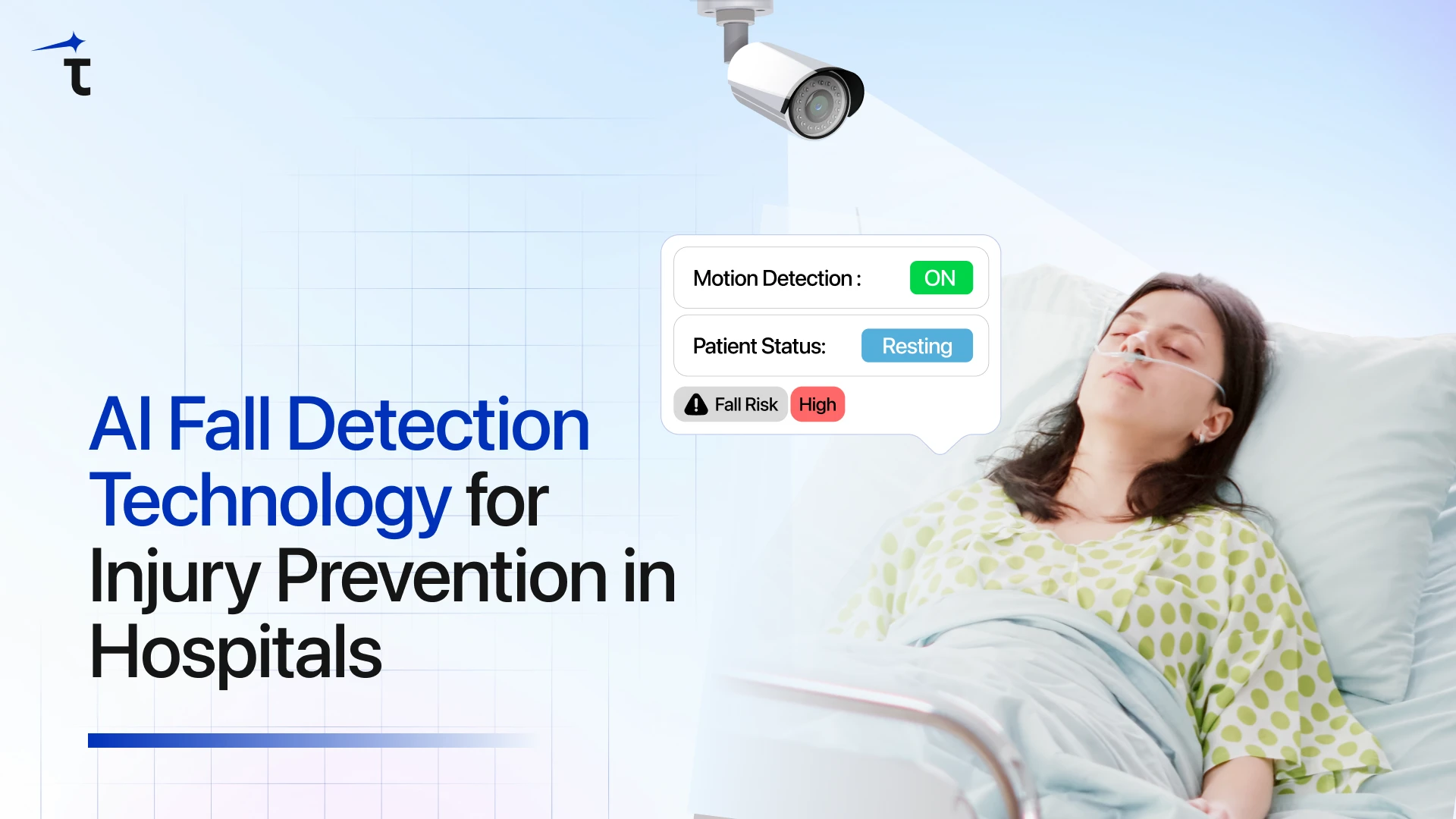
Video analysis using AI improves patient safety in hospitals and long-term care facilities. Video surveillance systems can detect patient falls, abnormal movements, and wandering into restricted areas; as a result, facilities can provide quicker intervention when an event occurs and improve patient care management.
- Transportation & Traffic Management
Video analytics provide the transportation industry with real-time traffic assessment, accident detection, and vehicle tracking information, all of which help authorities manage traffic congestion, enhance road safety, and improve infrastructure planning and decision-making.
- Manufacturing & Industry Safety
Manufacturing and industrial organizations can use video analysis to monitor production lines while also prioritizing employee safety. Artificial Intelligence tools can identify unsafe employee actions, mechanical problems with equipment, and violations of restricted areas, thereby helping reduce operational safety risks.
- Public Safety & Smart Cities
Smart cities use video surveillance and AI-based video analysis to monitor public places and crowds, with a focus on enhancing public safety. VA also assists by actively responding to emergencies. The use of these insights provides city officials with greater detail on city operations.
- Corporate Access Control and Business Security
Video analytics are utilized to control physical access and provide security for businesses. Video analytics functionality allows for the use of detection features such as facial recognition and intrusion detection to ensure that restricted areas only allow entry to authorized employees, i.e., improve internal security.
Key Benefits of AI-Enabled Video Analysis
AI-powered video analytics helps organizations shift from reactive monitoring to proactive and data-driven operations. By converting video into actionable data, companies can improve their decision-making, enhance security, and increase efficiency.
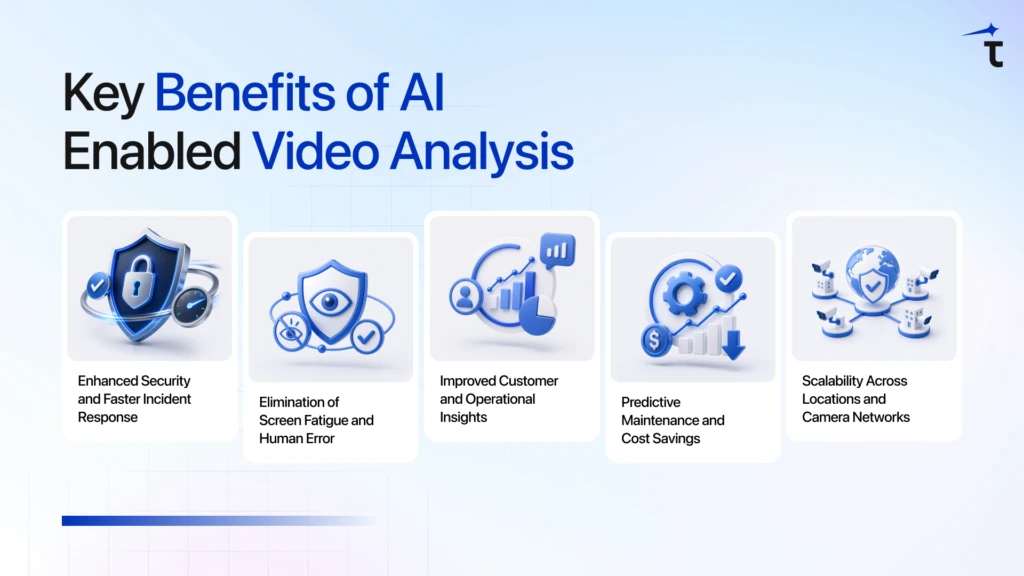
The benefits below make this technology worth the investment.
- Enhanced Security and Faster Incident Response
With AI-enabled video analysis, organizations can detect threats, anomalous behavior, and unauthorized access in real-time. Instead of waiting for an operator or officer to review footage, alerts can be generated automatically upon detection of an incident, allowing an organization to react faster and mitigate incidents before they escalate. This adds significantly to total security coverage.
- Elimination of Screen Fatigue and Human Error
It is exhausting to monitor multiple screens for extended periods, which also leads to human error. By automatically analyzing all video feeds (24/7) with consistent accuracy, the need for human operators to review CCTV footage is eliminated, thereby minimizing the risk of human error.
- Improved Customer and Operational Insights
In addition to improving security, video analytics provides valuable insights into customer behavior and overall operational efficiency. With this information, organizations can analyze customer movement patterns, engagement levels, and how their business operates over time to make changes to store layout and service delivery and to develop an enhanced business strategy.
- Predictive Maintenance and Cost Savings
With the help of AI, companies can recognize indicators of equipment failure, identify unsafe conditions, and identify operational inefficiencies. This allows organizations to schedule predictive maintenance and minimize unplanned downtime, thereby saving significant money on repairs. Predictive maintenance will also create opportunities to improve asset utilization over time.
- Scalability Across Locations and Camera Networks
One of the key benefits of implementing AI-enabled video analysis is the ease with which AI systems are scalable. AI can handle very large amounts of data quickly and efficiently in a variety of ways, depending on whether there is one or more than several thousand cameras at a location. Therefore, these systems are ideal for expanding and growing organizations.
Challenges and Considerations
Organizations can reap many benefits from AI-enabled video analysis, but they must also address the challenges that may impede its successful and responsible implementation. Understanding privacy and ethical needs, as well as technical limitations, helps organizations maximize the value.
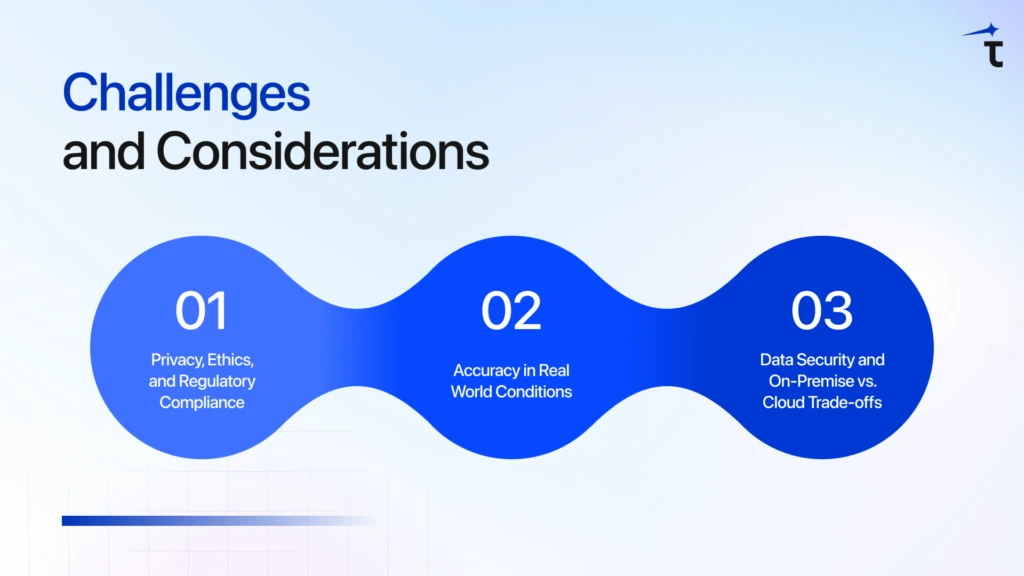
- Privacy, Ethics, and Regulatory Compliance
Maintaining user privacy and complying with data protection regulations are among the most important considerations. Organizations must maintain transparency with users, obtain user consent, and comply with applicable laws, including regional statutes such as the GDPR and local data protection frameworks.
- Accuracy in Real-World Conditions
Real-world factors can impact the accuracy of AI-enabled video analysis. Examples of environmental factors include poor lighting, inclement weather, camera angle, and the number of people in the environment. All of these factors can affect video analysis systems’ ability to detect and identify the object of interest in unpredictable, dynamic environments.
- Data Security and On-Premise vs. Cloud Trade-offs
As video data typically contains sensitive information, organizations need to take steps to protect it from unauthorized access or breaches. When implementing video analysis solutions, organizations must evaluate the relative security levels, scalability options, and costs of on-premises installations versus cloud-based solutions.
How to Build an AI Video Analytics Solution
To find or build the correct solution for transforming video analysis into an AI-enabled solution, you will need to have a well-thought-out strategy that links technology with your business goals. Below is what to look for when building a brand-new solution from the ground up using AI.
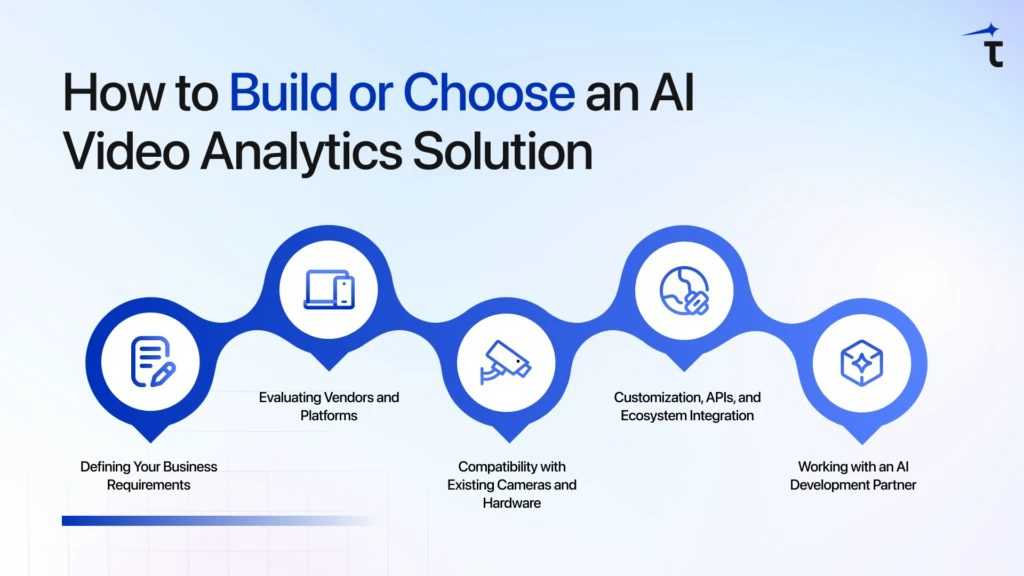
- Defining Your Business Requirements
Determining your business requirements for AI-enabled video analysis is the first step you should take to make sure the technology you implement will deliver on achieving the goals you have defined in your video analysis plan. Having a well-defined objective will help ensure you develop only the capabilities required to meet it.
- Evaluating Vendors and Platforms
When reviewing potential vendors and their platforms, identify those with proven expertise in video analysis using AI, a proven track record, and the ability to scale. Some additional considerations are ease of deployment, support services, flexibility, and the pricing model the vendor offers.
- Compatibility with Existing Cameras and Hardware
When evaluating new technology options, assess the combination of the new solution and existing CCT systems and determine whether they are compatible. In addition, many modern video surveillance systems that use AI or video analytics can integrate with existing CCT systems, resulting in lower upgrade costs and quicker implementation timelines.
- Customization, APIs, and Ecosystem Integration
Most companies have unique needs, and flexibility will be required. An effective AI video analytics solution should allow for the customization of features to meet individual customer needs. Integrations with third-party systems via API’s should also be considered, as they provide the most efficient way to integrate video data into other operational systems.
- Working with an AI Development Partner
Working with an experienced developer can greatly simplify the implementation of AI video analytics. A qualified partner can assist in designing and developing a solution tailored to a client’s specific business processes and provide scalable, long-term support.
Conclusion
In the modern digital world, video has quickly evolved from an ordinary recording medium to an intelligent system capable of delivering real-time insights, enhancing safety and security, and improving efficiency. As companies implement automation across their operations, video analysis using AI is becoming a primary element of their infrastructure.
Companies interested in implementing AI-enabled video analysis should consider the best approach for their organization. If you are looking for assistance with upgrading or developing your current or new video surveillance system, consider working with an experienced business partner, such as Technoyuga, to ensure a smooth, scalable deployment.

FAQs
No, in most cases you don’t need to replace your existing cameras. Modern AI-enabled video analysis systems are designed to work with current CCTV infrastructure, including IP and even analog cameras with encoders if needed. This makes it easier and more cost-effective to adopt video analysis using AI without major hardware upgrades.
Facial recognition is legal in many regions, but it is strictly regulated. Organizations must comply with data privacy laws, obtain user consent where required, and ensure ethical usage. Regulations vary by country, so it’s important to align your AI-enabled video analysis system with local compliance standards and policies.
Modern systems are highly accurate, often achieving over 95% accuracy for common tasks like object detection and people counting under normal conditions. However, accuracy can vary based on factors such as lighting, camera angle, and environmental conditions. Continuous learning helps improve performance over time.
Yes, AI video analytics can work in low-light environments, especially when combined with infrared cameras, thermal imaging, or night-vision technology. However, performance depends on video quality and lighting conditions better visibility leads to more accurate results.
A wide range of industries benefit from video analysis using AI, including retail, healthcare, transportation, manufacturing, banking, and smart cities. These sectors use it for security, operational efficiency, customer insights, and compliance monitoring.
The cost varies depending on scale and features. Cloud-based solutions typically range from ₹500 to ₹2,000 per camera per month, while enterprise systems may involve additional infrastructure costs. Many businesses achieve ROI within 6–12 months through automation and efficiency gains.
Traditional CCTV systems only record footage for later review, while AI-enabled video analysis actively processes video in real time. It detects events, identifies patterns, and generates alerts automatically turning passive surveillance into an intelligent system.
Deployment timelines depend on complexity, but most mid-sized implementations can be completed within 2–4 weeks. Larger or enterprise-scale systems may take longer due to customization and integration requirements.
Advanced systems minimize false positives through techniques such as multi-model validation, contextual filtering, and configurable alert thresholds. They also improve over time through machine learning and feedback loops, ensuring more accurate and reliable detection.
Yes, modern solutions are built for integration. They can connect with ERP, CRM, access control, POS systems, and other platforms through APIs, enabling seamless data flow and smarter automation across business operations.